test to diagnose diabetes insipidus Diabetes insipidus
Hey there! Today, we’re diving into the world of endocrine hormones and disorders. As you may know, the endocrine system is responsible for releasing hormones into our bloodstream to regulate various bodily functions. However, when something goes awry with this system, it can lead to a variety of disorders, including diabetes insipidus. So, what exactly is diabetes insipidus? Well, it’s a disorder that affects the body’s ability to regulate fluids. Specifically, it results in excessive thirst and urine output. This is due to a lack of hormone called antidiuretic hormone, which normally helps the body retain water. In terms of the pathophysiology of diabetes insipidus, it all comes down to the hypothalamus and pituitary gland. The hypothalamus produces antidiuretic hormone, which is then stored and released by the pituitary gland. However, if there’s damage to the hypothalamus or pituitary gland, the body won’t produce enough antidiuretic hormone, leading to the symptoms of diabetes insipidus. So, what are some treatments for diabetes insipidus? Well, it depends on the cause. For instance, if it’s due to a medication, stopping or changing the medication may help. Additionally, if the cause is a tumor or other structural issue with the hypothalamus or pituitary gland, surgery may be necessary. Other treatments may include hormone replacement therapy or medications that mimic the effects of antidiuretic hormone. Now, let’s take a look at some images that help illustrate the concept of diabetes insipidus. First up is an image of the hormone-producing glands in the body, including the hypothalamus and pituitary gland. Check it out below:
The Endocrine System
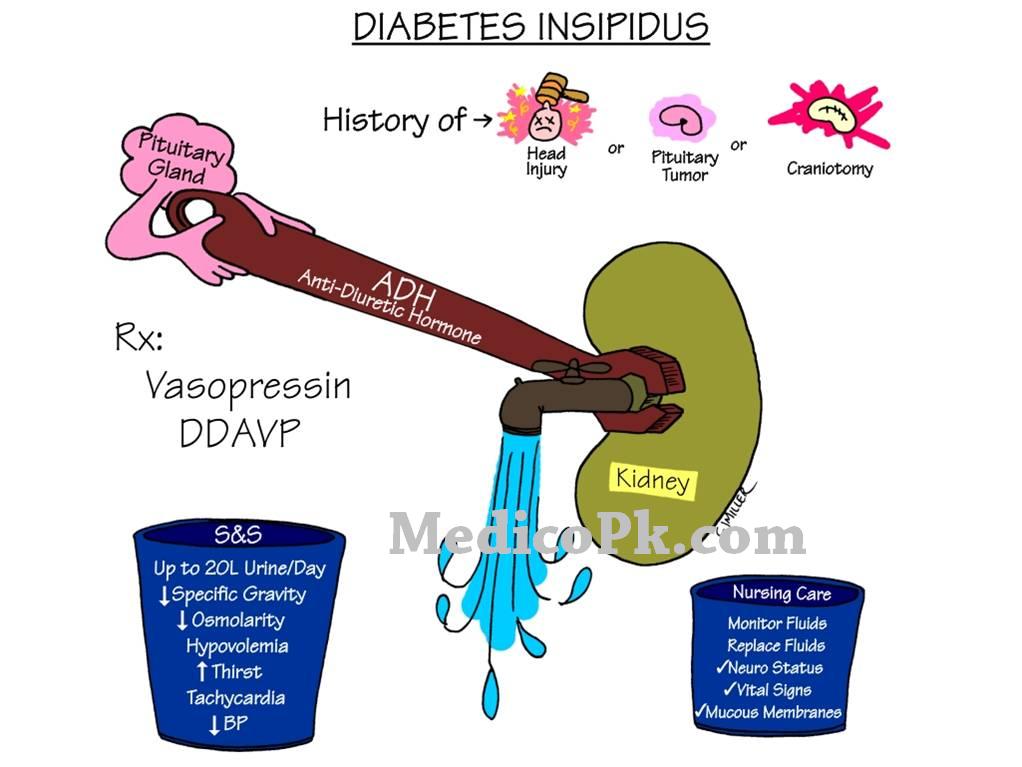 Image source: BIOLOGY IS FUN
As you can see, the hypothalamus and pituitary gland play a key role in the production of hormones and regulation of bodily functions. Next up, we have an image that shows the pathophysiology of diabetes insipidus on a cellular level. Take a look: Pathophysiology of Diabetes Insipidus
 Image source: mhmedical.com
This image helps illustrate how damage to the hypothalamus and pituitary gland can lead to a lack of antidiuretic hormone and the symptoms of diabetes insipidus. Overall, diabetes insipidus may not be as well-known as other endocrine disorders like diabetes mellitus, but it can still have a significant impact on a person’s quality of life. If you or someone you know is experiencing excessive thirst and frequent urination, it’s important to speak with a healthcare provider to determine the underlying cause and develop an appropriate treatment plan. If you are searching about BIOLOGY IS FUN: Endocrine Hormones and Disorders you’ve came to the right page. We have 5 Pics about BIOLOGY IS FUN: Endocrine Hormones and Disorders like Diabetes insipidus | The BMJ, Diagnosis and management of diabetes insipidus for the internist: an and also BIOLOGY IS FUN: Endocrine Hormones and Disorders. Here it is:
BIOLOGY IS FUN: Endocrine Hormones And Disorders
biologyisfunforstudent.blogspot.comdiabetes insipidus nursing blood urine pathophysiology osmolality signs siadh gravity adh sodium specific serum high mnemonics output diagram sugar water
Diagnosis And Management Of Diabetes Insipidus For The Internist: An
 onlinelibrary.wiley.cominsipidus diagnosis polyuria wiley internist
Diabetes Insipidus Pathophysiology Ppt
diabetesacidketosissymptoms.blogspot.comdiabetes insipidus pathophysiology diagnostic anesthesia
Diabetes Insipidus Results From Quizlet | Diabetic Health, Diabetes
 www.pinterest.comgestational insipidus
Diabetes Insipidus | The BMJ
 www.bmj.comdiabetes insipidus polydipsia biochemical fig bmj polyuria assessment
Diabetes insipidus results from quizlet. Gestational insipidus. Diabetes insipidus polydipsia biochemical fig bmj polyuria assessment